Pakistani rupee started depreciating when the caretaker government took office 2-3 months ago and the rupee hit rock bottom. Generally, there are many local (balance of payment) and global factors (strengthening of the dollar against other currencies) that drives the exchange rate. Considering all these cited factors, depreciation of currency is not just an end of a nation. Currencies do depreciate and bounce back, and fluctuations are the normal. There is no doubt that people look for stability.
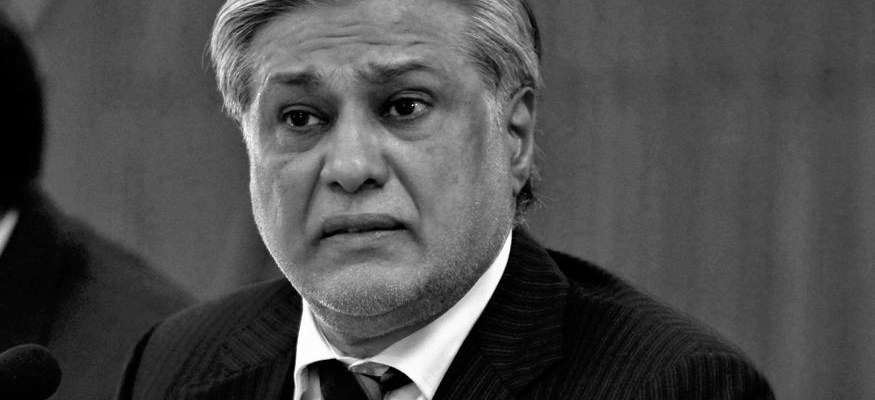
The problem is not only that Pakistani rupee had dozen of dips since last July. The problem is that when a former finance minister Ishaq Dar took office, it wasn’t just only the market forces, balance of payments, terms of trade, trade deficit and speculations but also the autocratic personality of former finance minister. Although micro and macro-economics factors can contribute to the downfall of the Pakistani rupee, but this time it was the Finance minister’s policies and in-stability of his tenure.
Ishaq Dar, a former Finance minister tried to run Pakistan under managed exchange rates. The prices are set by external market forces, but sometimes when currency shows too much volatility, then a government intervenes to stabilise the currency. So when exchanged rates are managed to keep the currency stable, then there is a problem. The market forces will correct these managed exchanged rates (mis-aligned).
Other than that, last government failed to achieve set targets, imports have increased and exports have decreased. Production of goods in Pakistan is less efficient and expensive relative to other countries, so Pakistan is struggling to hold ground in global market.
The market always reacts to speculations. Recently Pakistani rupee started to appreciate against dollar, because of a positive result of General elections 2018. In the past, in every general elections, fluctuations in local currency were expected.
 financiowl.com