

From the past ten years, Cambodia has progressed from one of the least developed countries to a country, which currently has tremendous economic growth. But the household consumption increased by 40%. It is rated as the 46th poorest country in the world. Now the question arises that are the poor Cambodians able to use their moveable assets as collateral on loans or not?
In a country so poverty-stricken, wishing to start a business through micro-finance seems very demanding and difficult. As much as the micro-finance industry (MFI) is getting bigger in Cambodia, it is not getting better for the entrepreneurs.
The micro-finance industry has just emerged in Cambodia and it is giving chances to people to start their own business, but the problem is that the people of Cambodia have no collateral to pay for loans they take except for their moveable assets. If the micro-finance industry starts taking the moveable asset as their collateral then they will fall into the global trend. There is no law saying that the MFI cannot take a moveable asset worth $500 dollar as collateral. Now, this could have provided more opportunities to take the loan but the people have a fear that their only asset will be the collateral of their loan. What if they fail? What if they get stuck between their outstanding loans? The industry is plagued with very high interest rates so the people find themselves paying a lot more than what they bargained for.
BLOCKCHAIN TECHNOLOGY
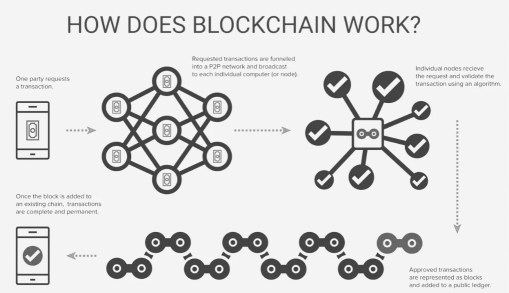
Moving on, here comes the Blockchain technology in this story. A blockchain is actually a growing list of records, called blocks, which are linked using cryptography. So, the idea is to have a decentralized loan system backed by blockchain technology.
How can that happen?
What you can do is, you can raise the initial funds through platforms like digital coin, the lenders are paid in cryptocurrency and all transactions are backed by the ethereum blockchain. The blockchain can be the most secured way of transaction as it cannot be altered or corrupted by anyone. Each time a transaction happens; the network of nodes verifies the transaction and creates a block of data which is added in order to reflect the transaction, which ensures that the payments made on blockchain are secure. One of the biggest features of the blockchain is that it can send any amount of digital cash without any need for a bank account. So you can send the currency to a person without a bank account and provide a loan to them.
This could be the way to change how microfinance lenders operate and cut down lending fees by more than half-by using the blockchain and digital coin.
This can all be achieved if MFI agrees to accept the cryptocurrency. It can be a game changer, it can revolutionise the micro-finance industry and the countries like Cambodia, where the poverty is very high, can actually get a benefit from blockchain.
 financiowl.com